
Home › Tantalum › niobium wire
Tantalum
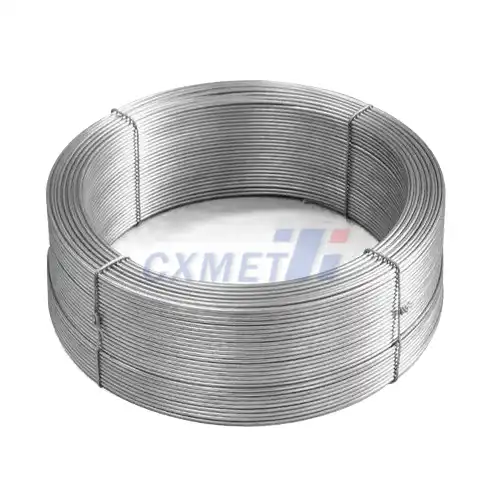
Niobium wire is a high-performance material known for its exceptional mechanical and chemical properties. It is manufactured from niobium, a lustrous, ductile, and corrosion-resistant metal with a high melting point of 2,468 °C. Niobium wire is widely used in various industries due to its excellent strength-to-weight ratio, electrical conductivity, and biocompatibility. This wire is typically available in different grades and diameters, catering to the specific needs of industries such as aerospace, electronics, and medical equipment manufacturing.
Niobium wire is highly valued for its ability to resist corrosion in environments containing acids such as hydrochloric and sulfuric acid. Additionally, it exhibits superconducting properties at cryogenic temperatures, making it a critical material in advanced technologies such as particle accelerators and MRI machines. The wire can be produced with high dimensional accuracy, uniform surface finish, and in compliance with international quality standards.
ASTM B392: Standard Specification for Niobium and Niobium Alloy Bar, Rod, and Wire.
GB/T 14842: Specifications for Niobium and Niobium Alloy Wires.
ISO 6848: Specifications for Filler Materials for Welding.
AMS 7852: Aerospace Material Specifications for Niobium.
Customized Standards: Available upon request for specific industrial requirements.
Material Composition: Pure niobium or niobium alloys.
Dimensional Precision: Tight tolerances as per client specifications.
Surface Quality: Free from defects, ensuring optimal performance in critical applications.
Packaging: Spools, coils, or straight lengths, customizable as per requirements.
Conducts electricity efficiently, suitable for electronic components.
Provides structural integrity in high-temperature environments.
Exhibits biocompatibility, ideal for medical implants and devices.
High melting point and thermal stability.
Excellent resistance to corrosion and oxidation.
Superior ductility and formability.
High purity ensuring low contamination levels.
Reliable performance in extreme conditions.
Long lifespan due to superior corrosion resistance.
Compatibility with diverse industrial applications.