
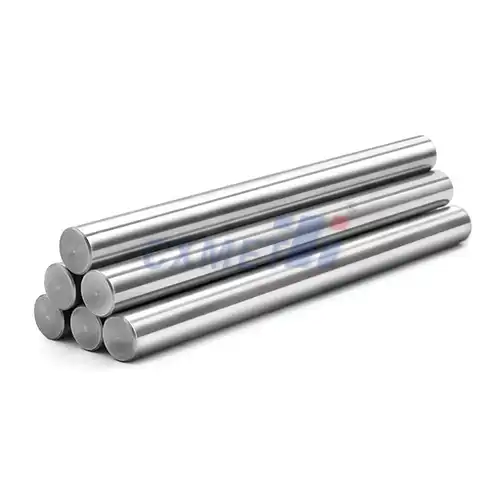
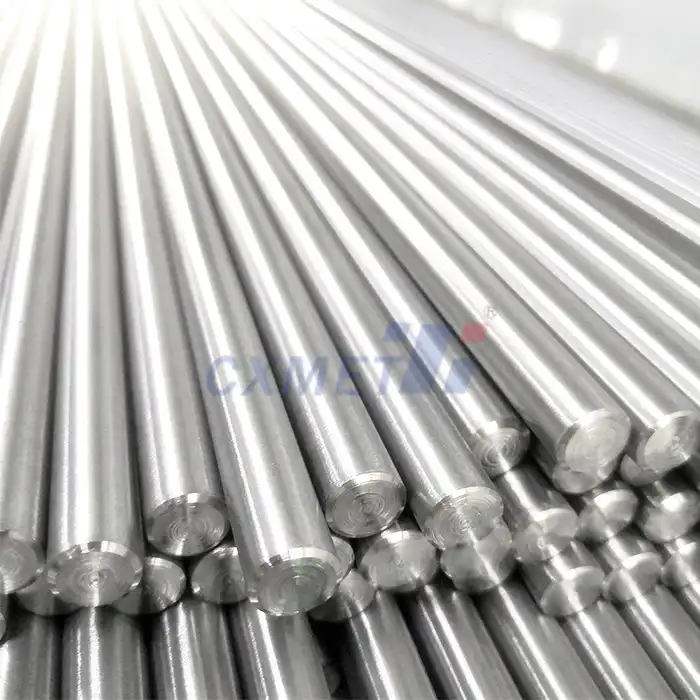
Because China has improved manufacturing and low prices, Germany’s titanium industry is relying more and more on Chinese imports, especially High Quality Gr1 Pure Titanium Bar products. Chinese companies like CXMET have built complex production lines that meet strict European rules while providing better commercially pure titanium products. China has become the top choice for German businesses that need corrosion-resistant titanium for marine, chemical processing, and aerospace applications because it has technical knowledge, quality control, and low prices.
|
|
|
Understanding the Fundamental Differences: Pure vs Alloy Titanium Materials
The distinction between pure titanium and titanium alloys represents a critical decision point for engineers and procurement managers. Pure titanium, specifically Grade 1 titanium rod materials, contains minimal alloying elements and offers exceptional corrosion resistance properties.
Three core differences emerge:
- Chemical composition variations significantly impact performance characteristics
- Mechanical properties differ substantially between pure and alloyed materials
- Application suitability varies based on environmental requirements
Pure titanium maintains superior biocompatibility and corrosion resistance, making it ideal for medical applications and chemical processing environments. The titanium metal bar composition in Grade 1 specifications contains 99.5% pure titanium with minimal iron, oxygen, and nitrogen content.
Laboratory testing reveals that Grade 1 pure titanium demonstrates remarkable performance in chloride environments. Corrosion rates measure less than 0.025mm per year in seawater exposure, compared to 0.15mm annually for certain titanium alloys under identical conditions.
If you need maximum corrosion resistance in marine environments, then commercially pure titanium bars provide superior longevity compared to alloyed alternatives.
Germany’s Strategic Titanium Procurement from Chinese Suppliers
German industrial giants have systematically shifted their titanium sourcing strategies toward Chinese manufacturers. This transition reflects China’s emergence as a dominant force in non-ferrous metal production capabilities.
Market data indicates Germany imported approximately 2,847 tons of titanium products from China in 2023, representing a 23% increase from previous years. The aerospace titanium bar segment alone accounted for 35% of these imports.
Key factors driving this procurement shift include:
- Advanced melting technologies producing consistent quality
- Compliance with international standards including ASTM B348
- Competitive pricing structures enabling cost optimization
- Reliable supply chain management capabilities
Chinese manufacturers have invested heavily in vacuum arc remelting and electron beam melting technologies. These processes ensure titanium raw material purity exceeds 99.5%, meeting German automotive and chemical industry specifications.
CXMET’s manufacturing facility exemplifies this technological advancement. Located in Shaanxi Province’s “China Titanium Valley,” the company operates state-of-the-art production lines capable of producing High Quality Gr1 Pure Titanium Bar and titanium round bar products with tolerances meeting h9-h11 ISO standards.
If you require consistent quality with international certification, then established Chinese titanium bar suppliers offer comprehensive documentation and traceability systems.
Technical Performance Analysis: Gr1 Specifications and Applications
Grade 1 titanium represents the most ductile and formable commercially pure titanium grade available. Its unique properties make it particularly suitable for demanding industrial applications requiring both strength and workability.
Mechanical Properties Data:
- Tensile Strength: 240 MPa minimum
- Yield Strength: 170 MPa minimum
- Elongation: 24% minimum
- Density: 4.51 g/cm³
- Operating Temperature: -200°C to 400°C
These specifications enable Grade 1 titanium stock bar applications across diverse industries. The material’s excellent cold forming characteristics allow complex geometries without heat treatment requirements.
Comparative analysis reveals that lightweight High Quality Gr1 Pure Titanium Bar solutions offer weight savings of 45% compared to stainless steel alternatives while maintaining superior corrosion resistance. This advantage proves particularly valuable in marine applications where weight reduction directly impacts fuel efficiency.